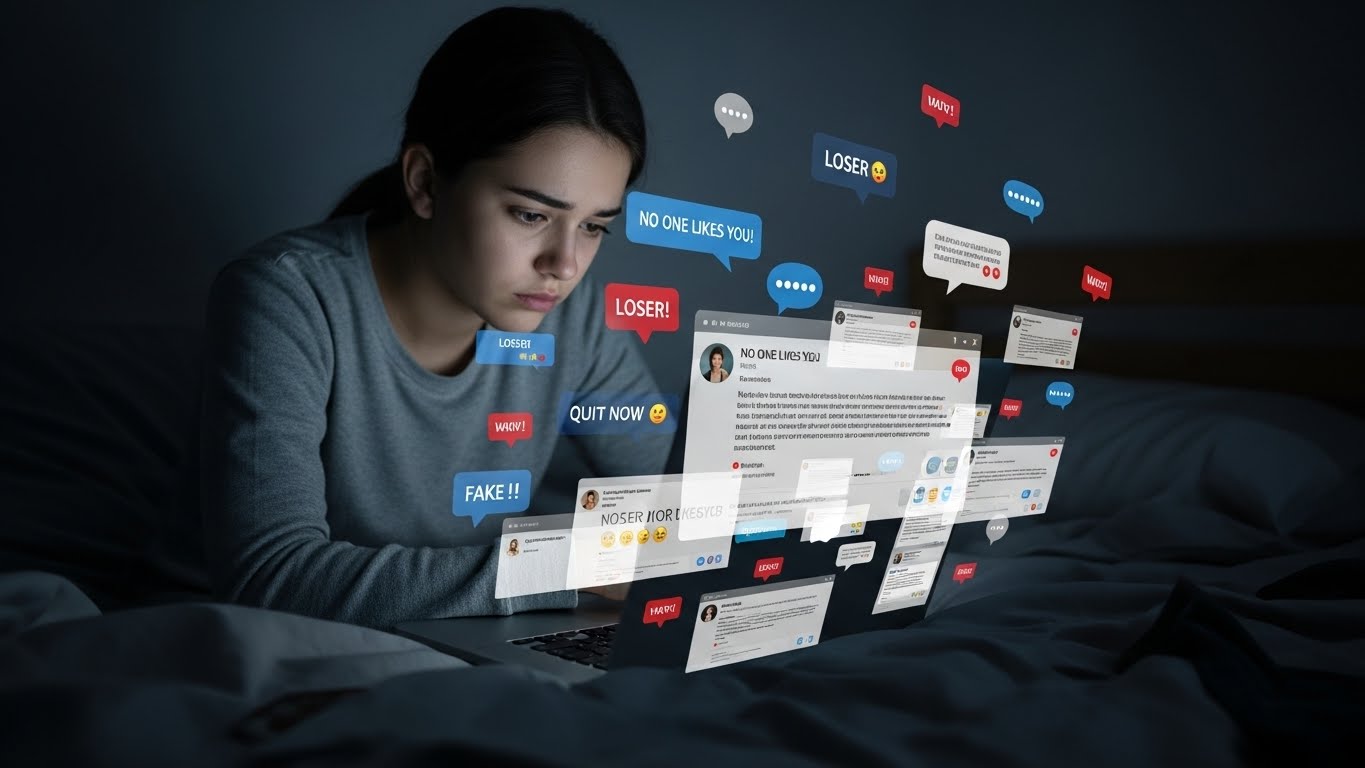
In today’s digital age, social media, messaging apps, and online platforms have made it easier than ever to connect with others. However, this increased connectivity comes with a dark side, cyberbullying.
Unlike traditional bullying, cyberbullying happens online, often anonymously, and can reach victims anytime, anywhere. Its impact on mental health can be profound and long-lasting.
Key Takeaways
- Cyberbullying is the act of targeting someone online, usually anonymously.
- It includes harassment through abusive messages, spreading rumors, sharing private images, and social exclusion.
- The effects on mental health can be severe, affecting emotional wellbeing, social life, and even safety.
What is Cyberbullying?
Cyberbullying is the use of digital technology to harass, threaten, or humiliate someone. Examples include:
- Sending threatening or abusive messages
- Spreading rumors or false information online
- Sharing private images without consent
- Excluding someone from online groups or conversations
Unlike face-to-face bullying, cyberbullying can occur 24/7 and can feel inescapable.
According to a systematic review of studies, cyberbullying is strongly linked with negative mental health outcomes in children and young people, including anxiety, depression, and psychosocial difficulties.
How Cyberbullying Affects Mental Health
Increased Anxiety and Stress
Victims of cyberbullying often experience persistent anxiety, worrying about when the next attack might happen. This constant stress can affect sleep patterns, concentration, and overall wellbeing.
Depression and Low Self-Esteem
Repeated online harassment can lead to feelings of worthlessness and hopelessness. Many victims begin to doubt themselves and feel socially isolated, which can contribute to clinical depression.
Social Withdrawal
To avoid online harassment, victims may reduce their social interactions both online and offline. This withdrawal can worsen feelings of loneliness and negatively affect relationships with friends and family.
Suicidal Thoughts and Self-Harm
In severe cases, cyberbullying has been linked to self-harm and suicidal thoughts. The emotional pain caused by relentless online abuse can be overwhelming, especially for young people.
Impact on Academic and Professional Life
The mental toll of cyberbullying can spill over into school or work performance. Difficulty concentrating, lack of motivation, and absenteeism are common consequences.
Steps to Protect Mental Health
While cyberbullying can feel overwhelming, there are strategies to protect mental wellbeing:
- Talk to Someone You Trust: Friends, family, teachers, or mental health professionals can provide support.
- Document and Report: Save messages, screenshots, and report incidents to platform administrators.
- Limit Online Exposure: Consider temporarily deactivating accounts or blocking the bully.
- Seek Professional Help: Therapists or counselors can help develop coping strategies and provide emotional support.
Conclusion
Cyberbullying is more than just an online nuisance, it is a serious threat to mental health. Recognizing its signs, addressing it early, and seeking support are crucial for protecting emotional wellbeing. Everyone deserves a safe online environment where they can communicate without fear.
FAQs
Q1: What is the difference between bullying and cyberbullying?
A: Traditional bullying happens in person, while cyberbullying occurs online using digital platforms.
Q2: Can cyberbullying affect adults too?
A: Yes, cyberbullying can affect people of all ages, not just children or teenagers.
Q3: How can I protect my child from cyberbullying?
A: Monitor online activity, maintain open communication, and teach safe internet practices.
Q4: What should I do if I feel depressed due to cyberbullying?
A: Reach out to trusted friends, family, or mental health professionals. Document incidents and consider reporting them.
Q5: Are online platforms responsible for preventing cyberbullying?
A: Platforms have policies against harassment, but users should also take proactive steps like blocking bullies and reporting abuse.