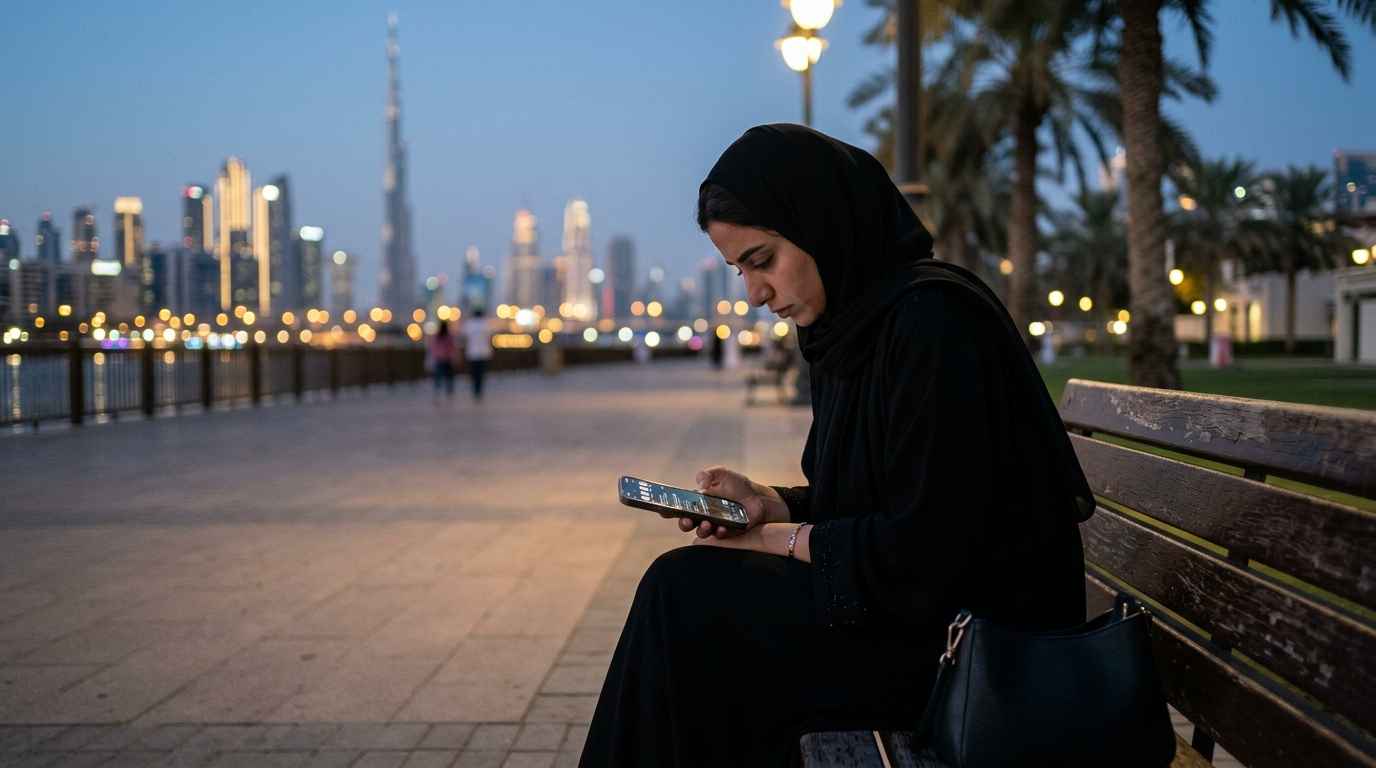
Finding a therapist in Dubai is not as simple as picking someone with a good profile photo. Dubai has a large and varied mental health landscape, from hospital-based psychiatrists to private counselors, online platforms to in-person wellbeing centers, therapists trained in CBT to those specializing in EMDR, grief, or couples work. The choice you make affects how comfortable you feel opening up and how quickly you see results. This guide walks through the things that actually matter when making that choice.
Start with the license
This is non-negotiable. In the UAE, mental health practitioners must hold a license from one of three regulatory authorities depending on where they practice: the Dubai Health Authority (DHA) for Dubai, the Department of Health (DOH) for Abu Dhabi, or the Sharjah Health Authority for Sharjah. Unregulated practitioners do exist, particularly in the life coaching and wellness space, and they are not subject to the same training requirements, ethical obligations, or accountability structures as licensed professionals.
Verifying a license takes two minutes. For DHA-licensed practitioners, go to the DHA Smart Services portal at dha.gov.ae and search by name. For DOH-licensed practitioners, use the DOH Health Practitioners portal at doh.gov.ae. If a therapist cannot provide their license number when asked, or if their number does not appear in the relevant registry, that is a red flag regardless of how impressive their profile looks.
For therapists working on online platforms registered outside the UAE, check whether they hold a license from a recognized international authority, such as a state license from the US, a BACP or UKCP registration from the UK, or equivalent. International licenses are recognized for online practice but the therapist should be willing to share their license details.
Match the therapist to your concern
Not every therapist is trained to work with every presenting concern. Therapy is a broad field and within it, specific training and approaches are matched to specific conditions. A therapist who describes themselves as a generalist may be perfectly competent, but if you have a specific concern, finding someone with relevant training tends to produce faster results.
| If you are dealing with... | Look for a therapist trained in... |
| Anxiety, worry, or panic | CBT (Cognitive Behavioral Therapy) or ACT (Acceptance and Commitment Therapy) |
| Depression | CBT, Behavioral Activation, or IPT (Interpersonal Therapy) |
| Trauma or PTSD | EMDR (Eye Movement Desensitization and Reprocessing) or Trauma-Focused CBT |
| Relationship or couples difficulties | EFT (Emotionally Focused Therapy) or the Gottman Method |
| OCD or intrusive thoughts | ERP (Exposure and Response Prevention) |
| Grief or loss | Grief-informed therapy, often integrating CBT or person-centered approaches |
| Work stress or burnout | CBT, ACT, or a coach-therapist with occupational focus |
| Eating concerns | CBT-E (Enhanced CBT for eating disorders) or DBT |
When reading a therapist's profile, look for these specific approach names rather than general phrases like 'evidence-based' or 'holistic.' Any therapist can claim to use evidence-based methods. What you want is specifics.
Language and cultural background
Dubai is one of the most internationally diverse cities in the world. Over 85% of residents are expatriates, speaking languages from Arabic to Hindi, Tagalog, Malayalam, Urdu, and dozens more. For most people, therapy works best in the language they think and feel in, not necessarily the language they use at work.
This is practical, not sentimental. Nuance, emotion, and cultural context are often lost in translation. A therapist who speaks your language and understands your cultural background can hear what you mean, not just what you said. In Dubai's therapy market, language availability is genuinely important and worth prioritizing when choosing between otherwise similar options.
Cultural fit matters beyond language too. Whether you prefer a therapist from a similar background, whether certain topics (family expectations, religious beliefs, gender dynamics) are central to your concerns, and whether you want someone who understands UAE expat life specifically, all of these are legitimate criteria.
Online or in-person?
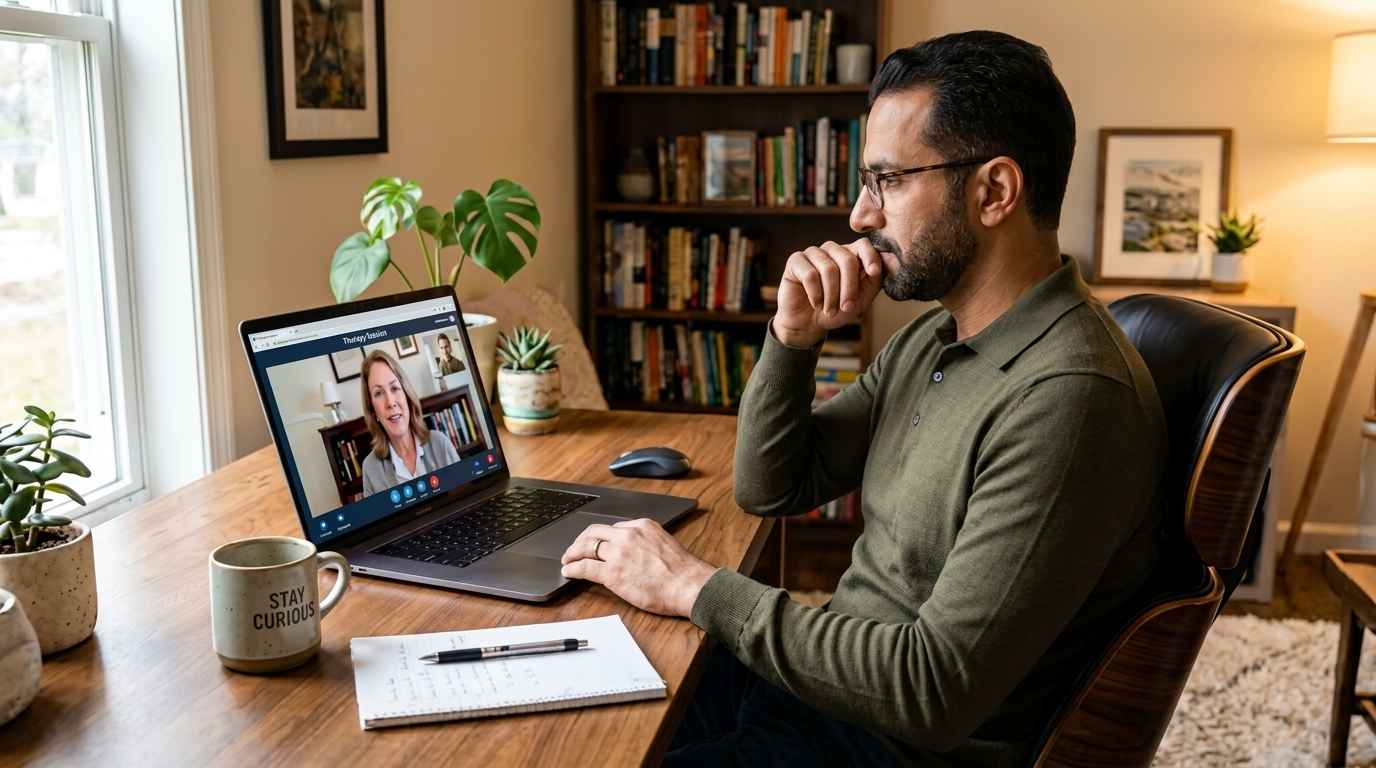
Both options are available and both are effective. The decision mostly comes down to your practical situation rather than a difference in clinical outcomes. Research published in JMIR Mental Health and Psychological Medicine has consistently found that online therapy produces outcomes equivalent to in-person therapy for anxiety, depression, trauma, and relationship concerns.
In-person is worth considering if you find face-to-face interaction easier, if you need a psychiatric assessment or psychological testing, or if you simply prefer the structure of leaving the house for your sessions. Dubai has established in-person mental health centres in JLT, DIFC, Downtown, and Al Barsha, among other areas.
Online is worth considering if your schedule is unpredictable, if you travel frequently, if Dubai traffic is a genuine barrier to consistent attendance, or if you want access to a wider pool of therapists beyond those with a physical clinic nearby. Online sessions also tend to cost significantly less than in-person sessions in Dubai, where clinic overheads are high.
What to expect from a first session
The first session is partly an assessment and partly a chance for you to assess the therapist. A good therapist will ask about what brought you to therapy, your history, what you have already tried, and what you are hoping to change. They will not push you to share more than you are comfortable with in the first session.
You should leave a first session with a rough sense of the therapist's approach, a shared understanding of what you are working on, and some indication of how many sessions to expect. If you leave feeling judged, dismissed, or confused about what happens next, that is worth paying attention to.
The therapeutic relationship itself is one of the strongest predictors of outcome in therapy, sometimes called the therapeutic alliance. Research consistently shows that the quality of the relationship between therapist and client matters more than the specific technique used. This means that if after two or three sessions you do not feel a connection, switching therapists is a reasonable and clinically supported decision, not a failure.
Practical questions to ask before you book
- What is your license number and with which authority?
- What approach do you use for [your specific concern] and why?
- How long do sessions last and how are they structured?
- How many sessions should I expect to need?
- How do you handle confidentiality, and are there any limits to it?
- What is your cancellation policy?
- Do you have experience working with clients from [your cultural or linguistic background]?
Most therapists will answer these questions before booking, either on their profile or in a brief introductory call. A therapist who is unwilling to answer basic questions about their license or approach is not someone you want to work with.
Frequently asked questions
Q: How do I verify a therapist's license in Dubai?
A: Go to the DHA Smart Services portal at dha.gov.ae and search the therapist by name. For Abu Dhabi, use the DOH Health Practitioners portal at doh.gov.ae. Licensed practitioners will appear in the public registry. Always ask for the license number before booking.
Q: What is the difference between a psychologist and a counselor in Dubai?
A: A psychologist typically holds a doctorate and can conduct psychometric and diagnostic assessments. A counselor or therapist usually holds a master's-level qualification in counseling, psychotherapy, or a related field. For most common concerns including anxiety, depression, and relationship difficulties, a licensed counselor is fully qualified. You do not need a psychologist unless assessment or diagnosis is specifically required.
Q: How long does it take to find the right therapist?
A: Some people connect with the first therapist they try. Others go through two or three before finding a good match. The therapeutic alliance is a strong predictor of outcome, so if the fit is not right after two or three sessions, it is worth trying someone else rather than persisting out of politeness.
Q: Should I see a psychiatrist or a therapist in Dubai?
A: See a therapist first for most common mental health concerns. Psychiatrists are specialists who manage complex conditions and prescribe medication. For anxiety, depression, relationship difficulties, stress, or grief, a licensed therapist is the appropriate starting point. Your therapist can refer you to a psychiatrist if medication is something worth considering.
Q: Can I switch therapists if things are not working?
A: Yes, and this is encouraged. Therapeutic fit matters. If after a few sessions you do not feel heard or understood, or the approach does not feel right, switching is a clinically supported decision. Many online platforms make this straightforward with no questions asked.