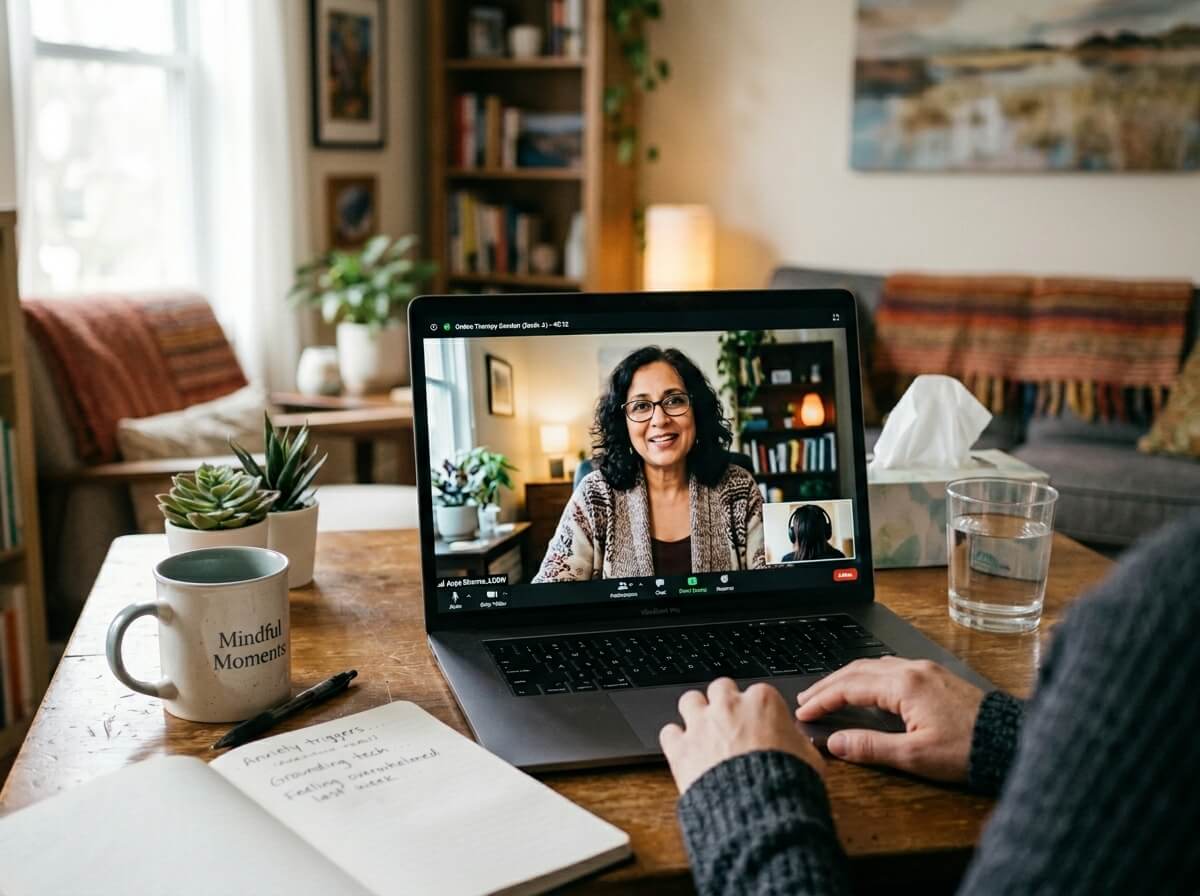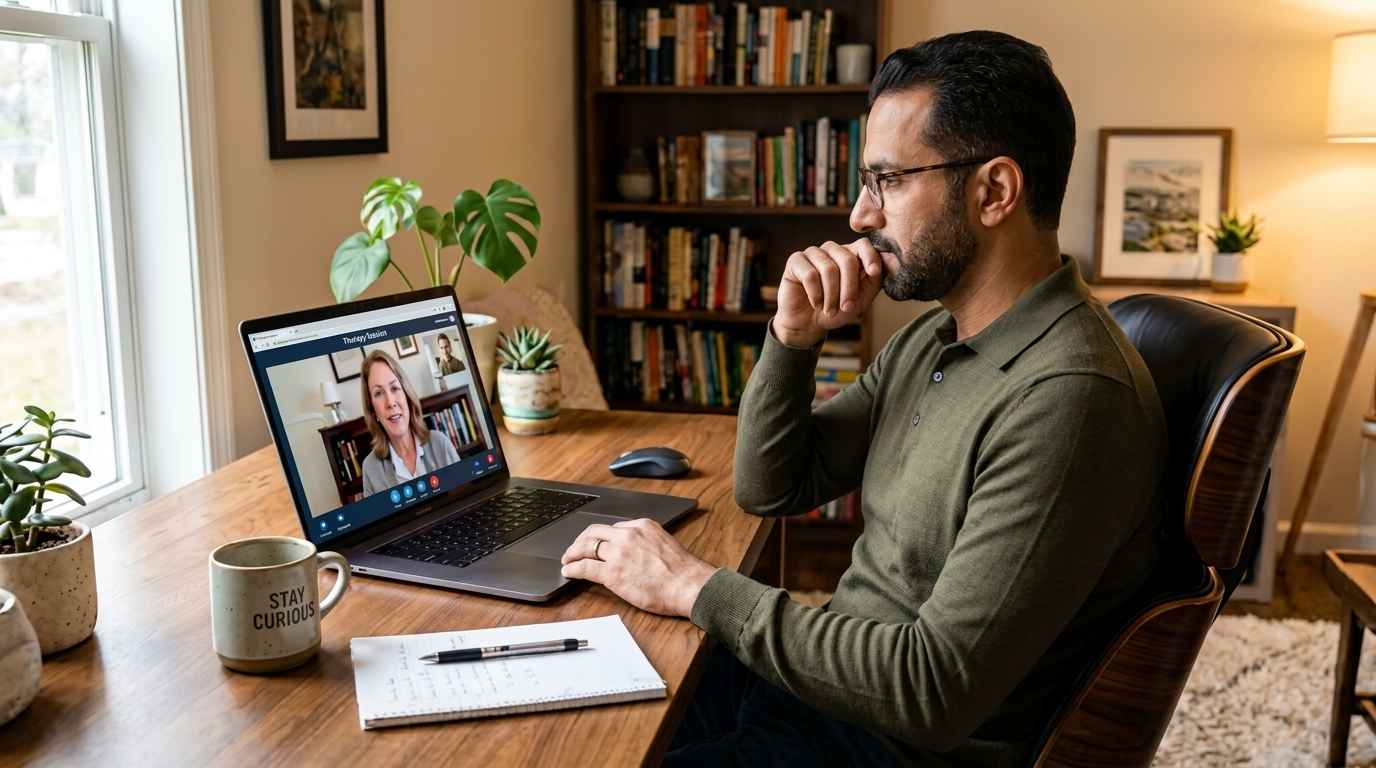
The question comes up constantly: is online therapy actually as good as sitting in a room with a therapist? In Dubai specifically, where commute times are long, schedules are demanding, and the mental health landscape spans everything from hospital-based clinics to offshore online platforms, the choice matters practically. Here is what the research says and what actually differs between the two formats.
What the evidence says about outcomes
The clinical evidence on this is now extensive enough to be fairly settled. A 2020 meta-analysis published in Psychological Medicine, covering 17 randomized controlled trials, found no significant difference in treatment outcomes between video-based and in-person CBT for depression. A separate meta-analysis in JMIR Mental Health covering anxiety disorders reached the same conclusion. For PTSD, trauma-focused CBT and EMDR delivered via video have shown equivalent outcomes to in-person delivery in multiple studies.
This does not mean online therapy is always better. It means that for most common presenting concerns, the format of delivery is not the primary determinant of outcome. The quality of the therapist, the therapeutic relationship, and the consistency of attendance matter far more than whether the session happens in person or via a screen.
The Dubai-specific case for online therapy
In most cities, the online versus in-person debate is primarily about preference. In Dubai, there are structural reasons why online therapy works particularly well.
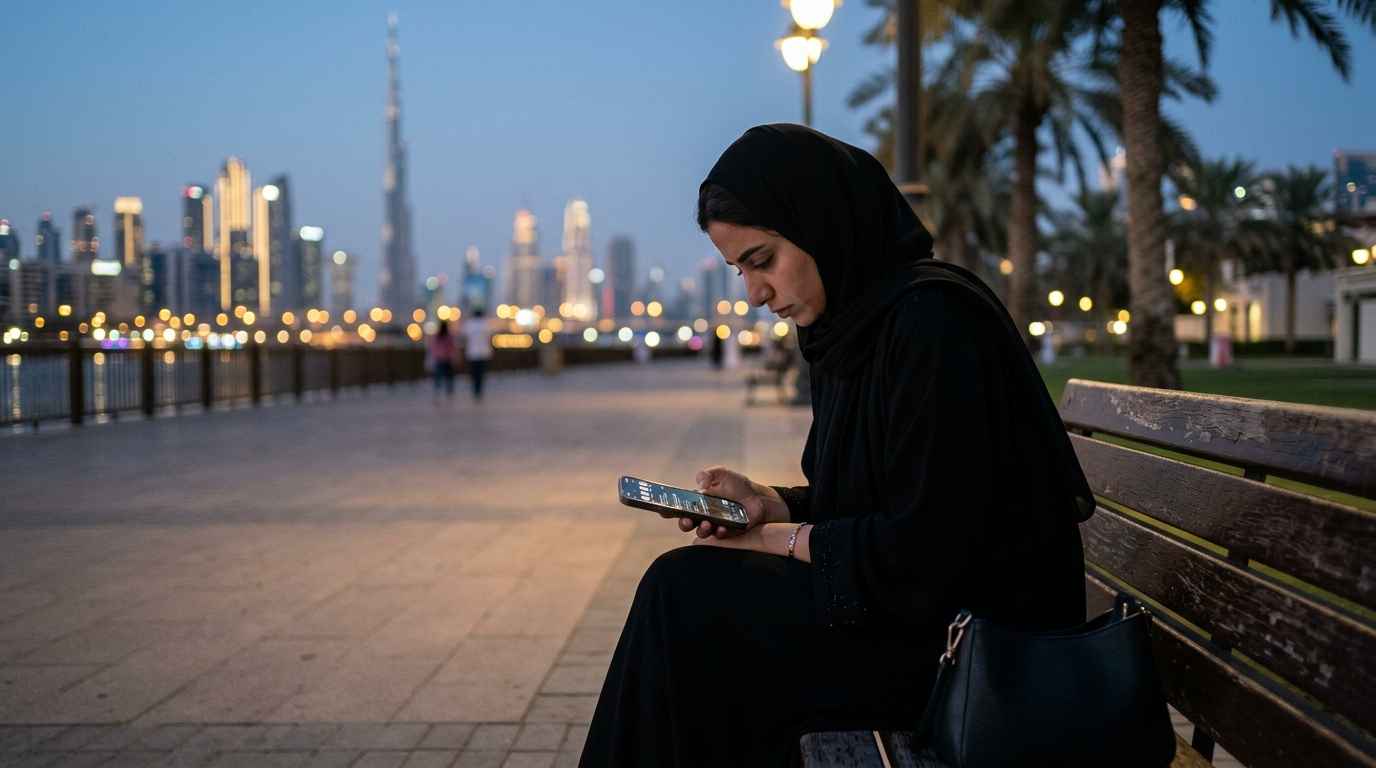
Traffic is a genuine barrier. A therapy session that takes 50 minutes can involve 30 to 60 minutes of commuting each way during peak hours in Dubai. For someone who finds it difficult to carve out consistent time for therapy, which is already the most common reason people drop out, commute friction is a real factor in whether therapy actually continues past a few sessions.
The expat population is highly mobile. A significant number of Dubai residents travel for work, relocate mid-year, or spend extended periods outside the country. In-person therapy requires physical presence; online therapy does not. For clients who travel frequently, maintaining consistency with the same therapist across different locations is only practical online.
The therapist pool online is larger. The number of in-person therapists in Dubai is limited by the available clinic space and the relatively small number of licensed practitioners with a local physical presence. Online therapy opens access to licensed therapists across a much wider pool, including UAE-licensed practitioners and internationally licensed therapists, with more options across language, specialization, and background.
Finally, cost. Online therapy in Dubai typically starts from AED 200 to AED 300 per session for a licensed therapist. In-person therapy at established private clinics in JLT, DIFC, or Downtown generally starts from AED 400 and runs to AED 800 or more. The lower overhead of online delivery reduces the per-session cost meaningfully, particularly for clients working through a full course of CBT (typically 8 to 16 sessions).
When in-person therapy is the better choice
Online therapy is not the right answer for every situation. There are specific contexts where in-person is clearly preferable or necessary.
Psychiatric assessment and psychological testing require in-person attendance. If your GP or another professional has recommended a psychiatric evaluation, cognitive assessment, or formal diagnosis, these require you to be physically present with a qualified practitioner. Online platforms are not designed for these purposes.
Some people find video sessions emotionally distancing. This is not a character flaw. For certain clients, the screen creates a sense of remove that makes it harder to access emotion and vulnerability. If you have tried online therapy and found this to be the case, in-person is worth prioritizing even at higher cost.
Children and adolescents sometimes engage better in person, though online child therapy has become more effective since 2020 and younger generations tend to be comfortable with video formats. This is an individual assessment rather than a blanket rule.
The hybrid approach
An increasing number of clients in Dubai use a combination of formats. They might start in-person for the first few sessions to establish a relationship and then transition to online for the ongoing work, or see their therapist in person monthly and fill in between sessions with video calls. Some therapists in Dubai now offer both formats with the same practitioner, which removes the disadvantage of having to build a new relationship when switching formats.
If consistency with a single therapist matters to you, which the research suggests it should, choosing a practitioner who can offer flexibility in format is worth considering.
A practical comparison
| Factor | Online | In-person |
| Clinical outcomes | Equivalent for most common conditions (anxiety, depression, trauma, relationships) | Equivalent for most common conditions |
| Cost per session | AED 200 to AED 500 typically | AED 400 to AED 800+ at private Dubai clinics |
| Commute time | Zero | 30 to 60 min each way in Dubai traffic |
| Therapist pool | Larger, UAE and internationally licensed | Limited to practitioners with local clinic space |
| Language options | Generally broader | Dependent on who has physical space in Dubai |
| Scheduling flexibility | Higher, more evening and weekend slots | Often limited to clinic hours |
| Suitable for assessment or testing | No | Yes |
| Suitable for intensive outpatient | No | Yes |
| Works across locations | Yes | No |
Frequently asked questions
Q: Is online therapy legally recognized in the UAE?
A: Yes. The UAE Ministry of Health and the Dubai Health Authority recognize telehealth services including online mental health therapy. Licensed practitioners can deliver therapy via video call to clients in the UAE.
Q: Can online therapy work for severe depression or anxiety?
A: Research supports online CBT and other evidence-based approaches for moderate-to-severe depression and anxiety. If medication may also be appropriate, your online therapist can refer you to a licensed psychiatrist in the UAE for a separate prescribing assessment.
Q: Do I have to be in Dubai to use online therapy services based in Dubai?
A: Not necessarily. If the platform and therapist are licensed for telehealth practice, you can typically access sessions from anywhere with a reliable internet connection. Check the specific platform's terms regarding client location.
Q: Will insurance cover online therapy in the UAE?
A: Some UAE health insurance plans that include mental health benefits now cover online therapy sessions. This varies by insurer and plan. Contact your insurer directly and ask whether telehealth mental health sessions are covered under your outpatient mental health benefit.
Q: How is confidentiality protected in online therapy?
A: Licensed therapists are bound by the same confidentiality obligations in online sessions as in-person sessions. Sessions should be conducted on a secure, encrypted video platform rather than general consumer video tools. Ask your therapist or platform what technology they use.